Cement
 Cement plays a key, but often unnoticed, role in our lives. Cement is mainly used as a binder in concrete, which is a basic material for all types of construction, including housing, roads, schools, hospitals, dams and ports, as well as for decorative applications (for patios, floors, staircases, driveways, pool decks) and items like tables, sculptures or bookcases. Concrete is a versatile and reliable construction material with a wide range of applications. When looking at possible pathways to reduce the carbon footprint of the European cement industry, it is important to examine some of the characteristics of the industry that will influence the availability or viability of emission reduction options.
Woods
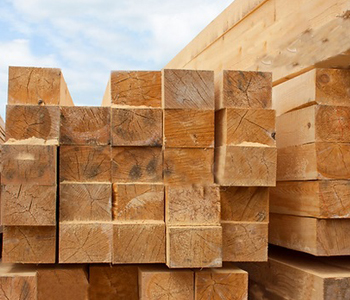 Wood is an organic, hygroscopic and anisotropic material. Its thermal, acoustic, electrical, mechanical, aesthetic, working, etc. properties are very suitable to use it is possible to build a comfortable house using only wooden products. With other materials, it is almost impossible.
Though wood is a lightweight building material, it outperforms even steel when it comes to breaking length (or self-support length). Simply put, it can support its own weight better, which allows for larger spaces and fewer necessary supports in some building designs.
Also, wood has a natural resistance to electrical conduction when dried to standard moisture content levels, usually between 7%-12% for most wood species. This conductivity is, in fact, the basis for one type of moisture measurement system. Its strength and dimensions are also not significantly affected by heat. This provides stability to the finished building and safety implications for fire situations.
In addition, wood’s acoustic properties make it ideal for minimizing echo in living or office spaces. Wood absorbs sound, rather than reflecting or amplifying it. This can significantly reduce noise levels for additional comfort.
Bricks
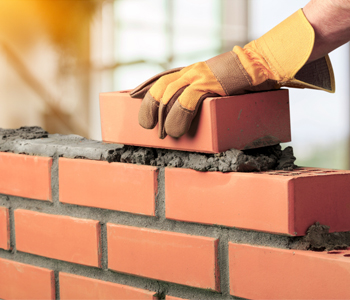 Bricks have been used for building innumerable structures over many thousands of years because of their durability. The reason why the brick turns into such a durable material is that, when fired through a kiln at up to 2000 degress, clay unit goes through a vitrification process which fuses the clay particles together. Unlike other materials, brick is very user and maintenance friendly creating energy efficient buildings, but also performing various functions. The advantages of bricks are countless.
- resistant against high pressure and frost;
- is a non-combustible material;
- does not shrink and expand during fluctuation of temperature;
- can absorb heat very well;
- is reusable and recyclable;
- is available in many colours and textures.
Metals
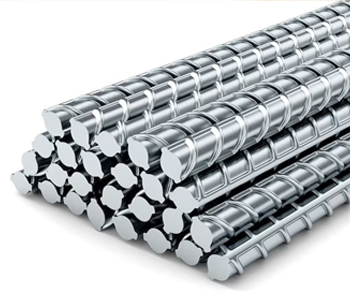 A handful of metals are commonly used for building construction, predominantly for durability, strength, and aesthetic requirements. The four most common metals used in construction are steel, aluminium, iron and copper. Each is used for its individual properties and the benefits that can be applied when constructing a building.
- Steel: Possibly the most widespread metal used within the industry, steel has many desirable attributes to assist with construction. One feature of steel is its availability; due to being 100% recyclable, the metal can be reused in endless amounts without losing any properties, making it one of the most sustainable metals in the industry.
- Aluminium : It is very lightweight, but also exceptionally durable, which are ideal properties for a building material that requires fast completion. It also has excellent corrosion resistance compared to alternative materials, making it very low maintenance and providing a longer lifespan. As a result, metal buildings, such as modern hospitals, high rises, offices and warehouses, are rarely built without aluminium.
- Iron : Another metal used throughout construction due to its ready accessibility is iron. This material was first used as a decorative metal instead of creating structures, but iron now has many applications as the construction industry evolved. On its own, this metal is very soft, making it easy to manipulate and shape. However, when combined with other elements such as steel, it can offer a robust alloy, providing many uses throughout construction.
- Copper : It is a metal highly resistant to corrosion and has been used for centuries for construction. Alone, its strength is incomparable as even in colder climates, the material doesn’t crack, making it ideal for buildings in colder climates. Even mixed as an alloy, this metal can withstand much pressure and even after years of being underground, items made of copper alloys, such as bronze, have been found in near-perfect condition.
Ceramics
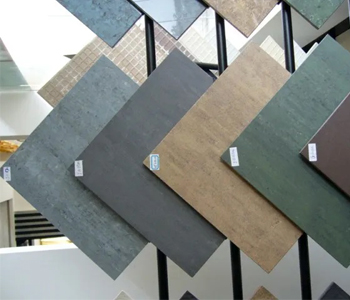 A ceramic is any of the various hard, brittle, heat-resistant and corrosion-resistant materials made by shaping and then firing an inorganic, nonmetallic material, such as clay, at a high temperature. Common examples are earthenware, porcelain, and brick.